


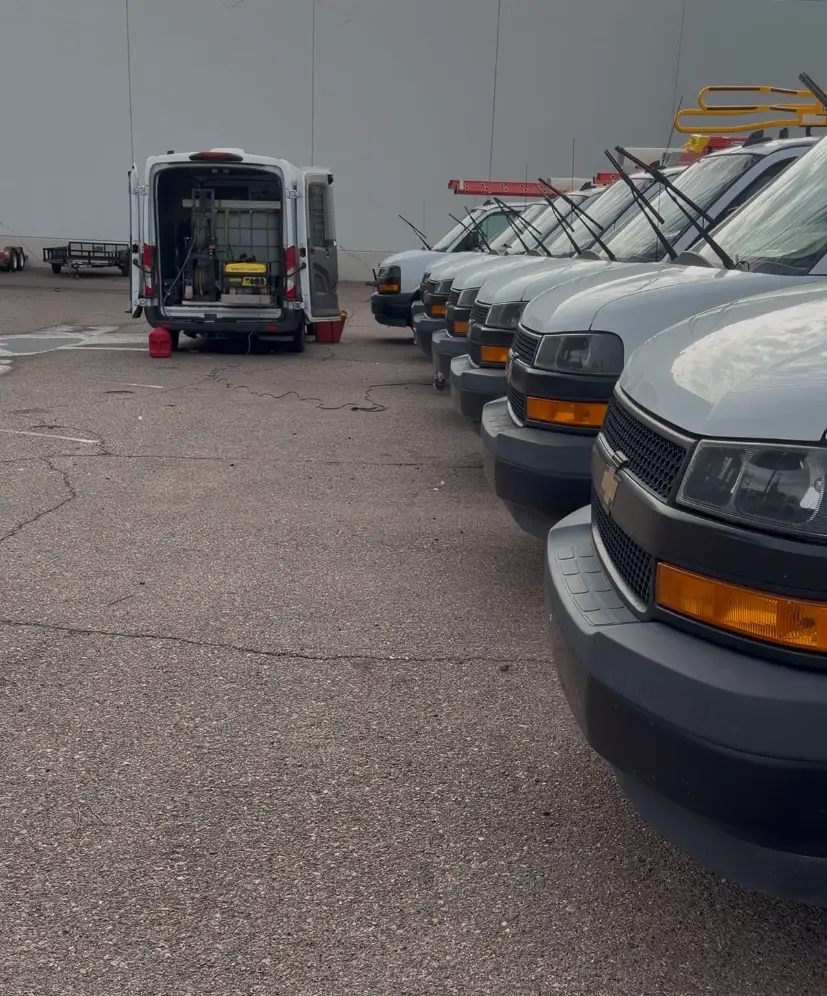
Keeping a fleet clean in Phoenix is about more than appearance. Intense sun, blowing dust, monsoon debris, road grime, and daily commercial use can quickly leave work vehicles looking neglected and make interiors harder to maintain.
For businesses that rely on vehicles every day, the right detailing schedule helps keep the fleet presentable without waiting until dirt, stains, and buildup become difficult to address.
Quick answer: Most commercial fleets in Phoenix benefit from professional detailing every 4 to 8 weeks, with more frequent exterior cleaning for vehicles exposed to heavy driving, construction sites, dust, or customer-facing work. Light-use vehicles may be able to go longer, while high-mileage or heavily used fleets often need attention every 2 to 4 weeks.
A practical schedule should account for where the vehicles travel, how often employees use them, whether customers see them, and how much time they spend parked outdoors.
What local fleet managers should know
-
Customer-facing vehicles generally need more frequent cleaning because their appearance contributes to the impression a business makes.
-
Vehicles traveling through dusty areas around the Valley may accumulate exterior and interior debris faster than lightly driven office vehicles.
-
Phoenix sun exposure can be especially demanding on exterior finishes and interior surfaces.
-
Construction, landscaping, delivery, and field-service fleets may require shorter detailing intervals because of their working conditions.
-
A consistent maintenance schedule is usually easier to manage than waiting until every vehicle needs intensive cleaning at once.
Why Does Fleet Detailing Frequency Matter in Phoenix?
Fleet detailing frequency matters in Phoenix because vehicles operate in a hot, dry environment where dust, UV exposure, road debris, and seasonal monsoon conditions can create ongoing maintenance challenges. A schedule based only on mileage may overlook the environmental exposure vehicles experience while driving or sitting outdoors.
The National Weather Service describes the Phoenix area as having an arid climate with extremely hot summers, while the Arizona monsoon brings seasonal thunderstorms, wind, and blowing dust. Those conditions mean fleet vehicles can face both prolonged dry-weather buildup and sudden periods of heavier dirt and debris.
Mint Auto Detailing helps local businesses address these conditions with professional vehicle detailing. We recommend looking at actual fleet use and exposure rather than choosing an arbitrary schedule that treats every commercial vehicle the same.
What Do Local Conditions Tell Us About Fleet Maintenance?
Local conditions suggest that fleet detailing should be treated as recurring maintenance rather than an occasional cosmetic service. Vehicles that spend their working lives throughout Maricopa County can encounter intense sunshine, dust, traffic residue, and seasonal storm debris within the same year.
From a practical detailing perspective, vehicles parked outside for long periods generally deserve closer monitoring than vehicles stored indoors. The same applies to trucks and vans regularly traveling between Phoenix, Tempe, Scottsdale, Mesa, Glendale, and surrounding communities.
The appropriate interval should ultimately reflect how quickly each fleet becomes dirty rather than the calendar alone.
How Does Delayed Detailing Affect a Local Fleet?
Delayed detailing can allow dirt, stains, odors, and surface contamination to accumulate until routine maintenance becomes a larger job. For customer-facing fleets, dirty vehicles can also affect the professional appearance employees present when arriving at homes, offices, job sites, and commercial properties.
Interior condition matters too. Technicians, delivery drivers, sales teams, and other employees may spend hours inside their vehicles each day. Regular interior cleaning can help keep high-touch surfaces, floor areas, seats, consoles, and cargo spaces easier to maintain.
For wrapped or branded vehicles, cleanliness is especially noticeable because the vehicle itself functions as a moving representation of the business.
What Are the Signs Your Fleet Needs Detailing More Often?
A fleet likely needs more frequent detailing when visible buildup returns well before the next scheduled service. Fleet managers should watch individual vehicles as well as overall fleet condition because certain routes and job assignments can create very different cleaning needs.
Common warning signs include:
-
Dust repeatedly covering dashboards, vents, consoles, and door panels.
-
Visible dirt or road film returning quickly after cleaning.
-
Water spots or environmental residue becoming noticeable on exterior surfaces.
-
Stains beginning to accumulate on seats, carpeting, or floor mats.
-
Persistent odors inside work vehicles.
-
Wheels and lower body panels developing heavy grime.
-
Branded vehicles looking noticeably dirty when arriving at customer locations.
-
Employees struggling to maintain vehicle interiors between professional services.
If these conditions consistently appear before the next appointment, shortening the detailing interval may make sense.
When Should You Call a Professional Fleet Detailer?
Professional fleet detailing makes sense when routine employee cleaning is no longer enough to maintain a consistent standard across the fleet. Drivers can remove trash, shake out mats, and wipe minor dust between services, but deeper interior cleaning and thorough exterior detailing require more time, equipment, and attention.
This distinction can be particularly important for businesses with several vehicles. Asking each employee to maintain a different standard can produce inconsistent results. Scheduled professional service gives fleet managers a more structured maintenance approach.
What Causes Phoenix Fleet Vehicles to Get Dirty So Quickly?
The most common causes of dirty Phoenix fleet vehicles are dust exposure, outdoor parking, frequent driving, job-site conditions, employee use, and seasonal weather. The relative importance of each factor changes depending on the type of business and where its vehicles operate.
1. Dust and dry conditions: Fine dust can settle on paint, glass, dashboards, trim, and interior surfaces, particularly when vehicles spend significant time outside.
2. Intense sun exposure: Outdoor fleets receive substantial sunlight, making regular care of exposed exterior and interior surfaces worth considering.
3. Monsoon weather: Wind, dust, rain, and storm debris can leave vehicles noticeably dirtier during Arizona’s summer monsoon period.
4. Job-site use: Contractors, landscapers, technicians, and construction-related businesses may bring soil, dust, tools, and debris into vehicle interiors.
5. High daily mileage: Delivery and service vehicles traveling across the Valley simply have more opportunities to encounter road grime and debris.
How Can You Keep a Fleet Cleaner Between Details?
Keeping a fleet cleaner between professional details requires simple, repeatable maintenance rather than occasional intensive cleaning. In Phoenix, paying extra attention to dust, outdoor exposure, and monsoon-season debris can help vehicles remain presentable between scheduled appointments.
Assign drivers basic responsibilities such as removing trash at the end of a shift, addressing spills promptly, and keeping unnecessary materials out of the cabin. Floor mats should also be checked regularly, particularly in work vehicles where dirt enters on employees’ shoes.
Fleet managers can perform quick visual inspections weekly. If multiple vehicles repeatedly look dirty before their scheduled service, that is useful evidence that the fleet needs a shorter detailing cycle.
What Results Should You Expect From Routine Fleet Detailing?
Routine fleet detailing should make vehicle condition more consistent and reduce the amount of accumulated grime that has to be addressed at one time. The exact results depend on vehicle age, existing condition, materials, usage, and the services selected.
A maintained fleet should generally be easier to keep presentable between appointments than one that receives attention only after substantial buildup occurs. Establishing a predictable schedule also gives fleet managers an opportunity to plan service around operational needs.
What Fleet Detailing Mistakes Should Phoenix Businesses Avoid?
The biggest fleet detailing mistake is waiting until vehicles look severely neglected before scheduling service. Reactive cleaning may leave businesses repeatedly dealing with heavy buildup instead of maintaining vehicles at manageable intervals.
Mistake: Using the same schedule for every vehicle.
Consequence: Heavy-use trucks may become dirty long before lightly used vehicles.
Better approach: Group vehicles according to mileage, job function, parking conditions, and customer visibility.
Mistake: Ignoring interiors.
Consequence: Dust, debris, stains, and odors can accumulate where employees spend their workday.
Better approach: Include interior condition in routine fleet inspections.
Mistake: Forgetting seasonal conditions.
Consequence: A schedule that works during one part of the year may be insufficient during dusty or stormy periods.
Better approach: Adjust service frequency when local conditions change.
What Is a Common Fleet Detailing Scenario in Phoenix?
A common local scenario is a service company with several branded vans that travel throughout Phoenix and nearby East Valley or West Valley communities. The vans are driven daily, parked outdoors during appointments, and used to carry employees, equipment, and supplies.
A fixed quarterly detail might initially sound sufficient. In practice, managers may notice that the vehicles become visibly dusty and the interiors accumulate job-related debris much sooner.
In that situation, moving to a more frequent maintenance schedule can make more sense than repeatedly waiting for significant buildup.
Which Fleet Detailing Services Can Help?
Fleet detailing services can address recurring exterior and interior cleaning needs based on how commercial vehicles are actually used. The appropriate combination depends on fleet condition, vehicle type, operational demands, and the level of appearance the business wants to maintain.
We can help businesses evaluate their fleet’s current condition and determine an appropriate detailing approach without assuming every vehicle requires the same treatment.
Is Scheduled Detailing Better Than Cleaning Vehicles as Needed?
Scheduled detailing is generally better for businesses that want predictable fleet appearance, while as-needed cleaning may work for small or lightly used fleets. The key difference is whether vehicle condition can be monitored reliably enough to prevent excessive buildup.
Scheduled service provides consistency and makes maintenance easier to plan. As-needed service offers flexibility but requires someone to actively monitor each vehicle. Many Phoenix businesses can benefit from combining the two approaches, using a regular baseline schedule with additional service when seasonal weather or unusually heavy use requires it.
Where Can Local Businesses Schedule Fleet Detailing?
Businesses in Phoenix and surrounding Valley communities can consider fleet detailing based on their operational area and vehicle needs. Nearby markets such as Scottsdale, Tempe, Mesa, Glendale, and other parts of Maricopa County experience many of the same heat and dust concerns.
What Can Happen If You Wait Too Long Between Details?
Waiting too long between details can allow routine dust, grime, stains, and interior debris to become more noticeable and time-consuming to address. For customer-facing fleets, postponing service can also mean employees continue arriving at appointments in vehicles that no longer reflect the desired professional image.
Rather than detailing solely when vehicles become visibly dirty, fleet managers can use regular inspections to determine whether the current interval is working.
FAQ
How often should commercial vehicles be detailed in Phoenix?
Commercial vehicles in Phoenix often benefit from detailing every 4 to 8 weeks, but there is no universal interval. High-use, customer-facing, outdoor, or job-site vehicles may need service every 2 to 4 weeks, while lightly used vehicles may require less frequent attention.
Does Phoenix dust mean fleets need more frequent detailing?
Yes, Phoenix dust can justify more frequent cleaning when vehicles spend substantial time outdoors or travel through dusty environments. Fleet managers should monitor paint, glass, wheels, dashboards, floor areas, and other surfaces. If visible dust repeatedly returns well before scheduled service, consider shortening the maintenance interval.
Should fleet detailing change during monsoon season?
Yes, fleet detailing frequency may need to change during Arizona’s monsoon season because wind, blowing dust, rain, and storm debris can alter vehicle condition quickly. Instead of automatically increasing every appointment, inspect the fleet more frequently and adjust service based on actual exposure.
How often should customer-facing fleet vehicles be cleaned?
Customer-facing vehicles should be cleaned often enough to maintain a consistently professional appearance. In Phoenix, branded service vans, sales vehicles, and delivery vehicles may need attention more frequently than back-of-house fleet vehicles because dust and road grime are highly visible to customers.
Do work trucks in Maricopa County need more detailing than office vehicles?
Work trucks may need more frequent detailing when they visit construction sites, carry equipment, or experience heavier daily use. A lightly driven office vehicle and a field-service truck operating throughout Maricopa County can accumulate dirt at very different rates, so their maintenance schedules should not automatically be identical.
Can employees maintain fleet vehicles between professional details?
Yes, employees can handle basic maintenance such as removing trash, addressing minor spills, and keeping floor areas organized between professional details. These habits can help, but they do not necessarily replace deeper cleaning when Phoenix dust, job-site debris, stains, or exterior contamination accumulate.
Is monthly fleet detailing too frequent?
Monthly fleet detailing is not necessarily too frequent for vehicles that are driven daily, parked outdoors, visit dusty job sites, or represent the business at customer properties. For lightly used vehicles, monthly service may be more than necessary. Actual vehicle condition should guide the final schedule.
How do I choose a fleet detailing schedule?
Choose a fleet detailing schedule by reviewing vehicle usage, mileage, parking conditions, job-site exposure, customer visibility, and how quickly dirt returns after service. Start with a reasonable interval, inspect vehicles weekly, and adjust the schedule based on what you observe across the fleet.
Keep Your Phoenix Fleet Ready for the Road
A good fleet detailing schedule should match the way your vehicles actually operate in the Valley. Regular attention can help keep commercial vehicles cleaner, more presentable, and easier to maintain despite local dust, heat, and demanding daily use.
Keep Your Fleet Looking Professional Across Phoenix
We can help you determine a practical detailing approach based on your fleet’s vehicles, usage, and current condition.